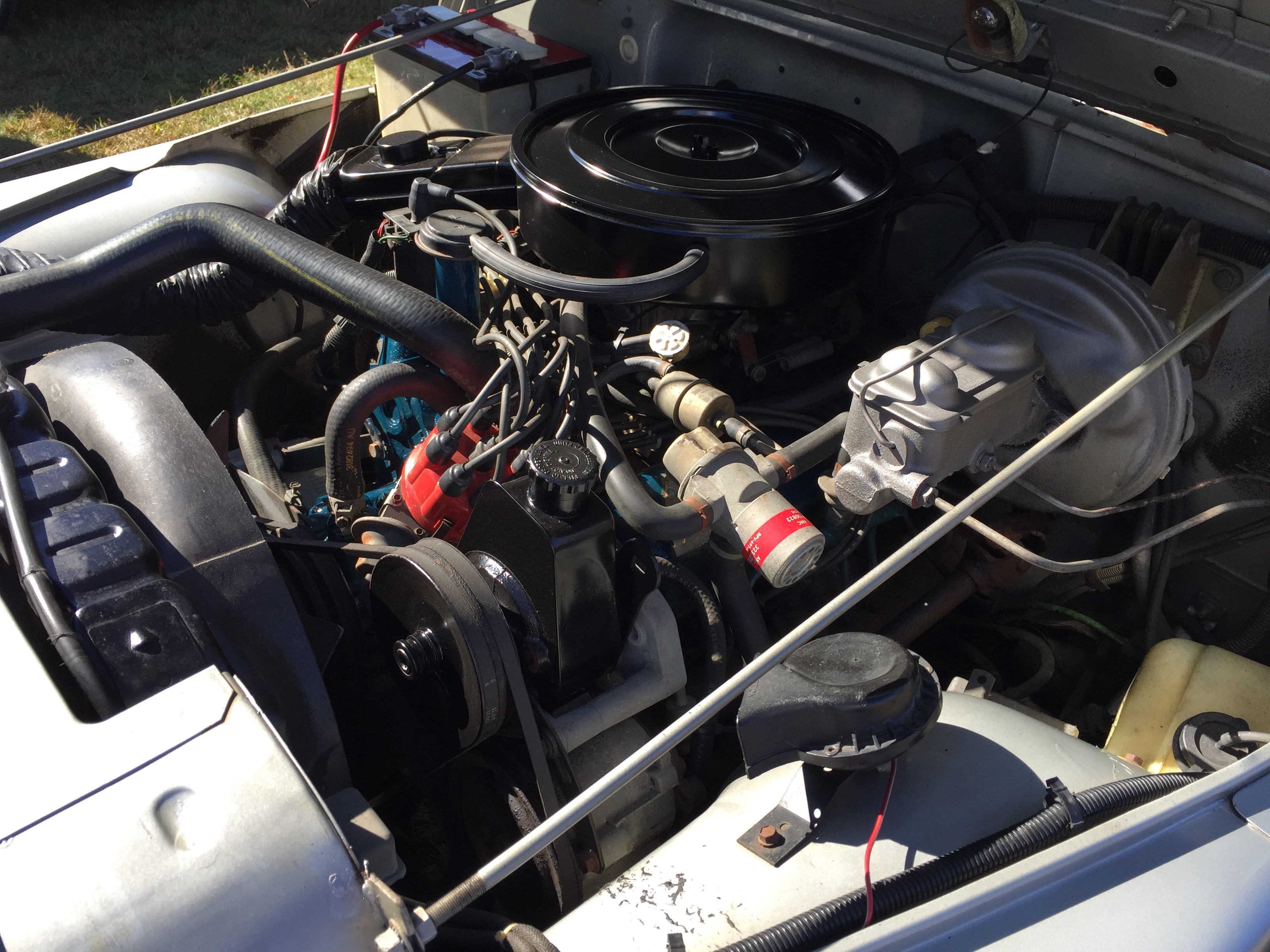
CJ Electrical Gremlins: A Guide to Losing Your Mind

If there's one thing that unites all CJ owners, it's the shared trauma of chasing electrical problems. The factory wiring in a 40-year-old open-top vehicle that's been through mud, rain, and the questionable "improvements" of every previous owner is less of a wiring harness and more of a loosely organized fire hazard.
But here's the thing — CJ electrical systems are actually simple. There are about 47 wires total. The problem is that 44 of them are corroded, 2 have been spliced by a previous owner using masking tape, and the last one is the one you need.
The #1 Problem: Grounds (It's Always Grounds)
I'm going to save you approximately 40 hours of troubleshooting: check your grounds first. Then check them again. Then clean them. Then add new ones.
About 70% of all CJ electrical problems are caused by bad ground connections. The body and frame serve as the ground path, and after four decades of rust, mud, and creative repairs, electrons can barely find their way home.
Critical Ground Locations
- Battery negative to engine block — If this cable looks like it survived a war, it did. Replace it.
- Engine block to frame — A braided strap that's probably missing or has the structural integrity of a wet noodle.
- Body to frame — The tub sits on rubber mounts, which means it's electrically isolated from the frame. Without a dedicated ground strap, your entire dash and light system is grounding through... hope? Optimism?
- Tail light grounds — Every CJ owner has had the experience of hitting the brakes and watching the turn signals light up, the dash lights flicker, and the radio change stations. Bad tail light grounds turn your Jeep into a Christmas light show.
The Fix
Run new ground wires. This costs about $15 and fixes 70% of all electrical problems. Your family will not understand why you're so excited about wire.
- 8-gauge from battery negative to engine block
- 8-gauge from engine block to frame
- 10-gauge from frame to body (behind the dash)
- 14-gauge to each tail light housing
Clean every contact point to bare metal. Use star washers. This is the most cost-effective repair in the entire CJ universe.
The Fuse Box: A Museum Exhibit
The stock CJ fuse box uses glass tube fuses that were outdated when Reagan was president. It's usually located under the dash, held in by one screw and the power of positive thinking.
Pro tip: Pull each fuse and clean the contacts with fine sandpaper. The corrosion on those fuse clips has more resistance than your wife has to you buying another Jeep part. This alone fixes a surprising number of intermittent problems.
Many people upgrade to a modern ATO blade-style fuse box. It's about $30 and an afternoon of work. Your CJ will go from "electrical system" to "actual electrical system."
The Fusible Link: The Invisible Killer
Somewhere between your battery and everything else is a fusible link — a short piece of smaller-gauge wire designed to melt before the rest of the wiring catches fire. Noble concept. Terrible execution.
When a fusible link fails, it melts internally but looks fine from the outside. So you'll spend 4 hours testing everything downstream before you finally grab the link, feel it stretch like taffy, and realize the problem was the first thing in the circuit.
Ask me how I know. Actually, don't. I'm still upset.
Alternator Problems
Symptoms
- Battery light on while driving
- Dim headlights at idle (dimmer than their usual "is this even on?" brightness)
- Battery keeps dying
- Voltage gauge reads below 13V
The Fix Nobody Wants to Hear
Check the belt tension first. I know, I know — you want it to be something more interesting. It's not. The belt is loose. Tighten it.
If it's actually the alternator, the stock Motorcraft unit puts out a heroic 35-40 amps — barely enough to run the ignition and headlights simultaneously. The most popular upgrade is the GM 10SI alternator — a one-wire design that puts out 60-80 amps.
Cost: about $60-80. But you'll also need a bracket adapter, new wiring, and the will to figure out which of the 47 tutorials online is actually correct. Budget 4 hours and 2 trips to the parts store.
Ignition: Why Your CJ Won't Start (This Time)
If You Still Have Points (Pre-1975)
Why? Stop reading this article and go buy a Pertronix Ignitor. It's $80, fits inside your existing distributor, and eliminates the points and condenser that are causing you to break down at the worst possible moment.
I'll wait.
Back? Good. Moving on.
Motorcraft/Duraspark Module (1975-1986)
The external ignition module mounted on the fender well is a ticking time bomb. It works perfectly until it doesn't, with zero warning. Engine just dies. No sputter, no cough — it's running, and then it's not, usually on the highway, in the rain, during rush hour, on your anniversary.
Always carry a spare module. They're $25 at any parts store. Keep one in the glove box, one in your trail bag, and one under your pillow.
The GM HEI Swap
The ultimate CJ ignition upgrade. Davis Unified Ignition (DUI) makes HEI distributors adapted for AMC engines. One wire, monster spark, and you'll never deal with a failed module again.
Cost: $250-350. You'll justify it by calculating the cost of all the tow trucks you won't need. This math checks out.
The Nuclear Option: Complete Rewiring
If your CJ has been through 4 owners who each "did some electrical work" — meaning they spliced wires with whatever they had in their pocket — a complete rewiring harness might be the move.
- Painless 10106 — 22-circuit CJ harness: $500-600
- Centech — similar product: $400-500
It's a full weekend project (your wife has heard this before) but the result is a completely new electrical system. Every wire labeled, properly gauged, and connected to a modern fuse box.
Is it expensive? Yes. Is it cheaper than the therapy you'll need after tracing ghost voltages through 40-year-old wiring for the 15th time? Also yes.
The Honest Truth
CJ electrical systems aren't complicated — they're just old and corroded. A $15 ground wire upgrade, clean fuse box connections, and a spare ignition module will solve 90% of problems. The other 10% will lead you to a complete rewire, which you'll start on a Saturday morning and finish... eventually.
The real question isn't "will I have electrical problems?" It's "will I have electrical problems before or after I've already left for the trail?" The answer is yes.